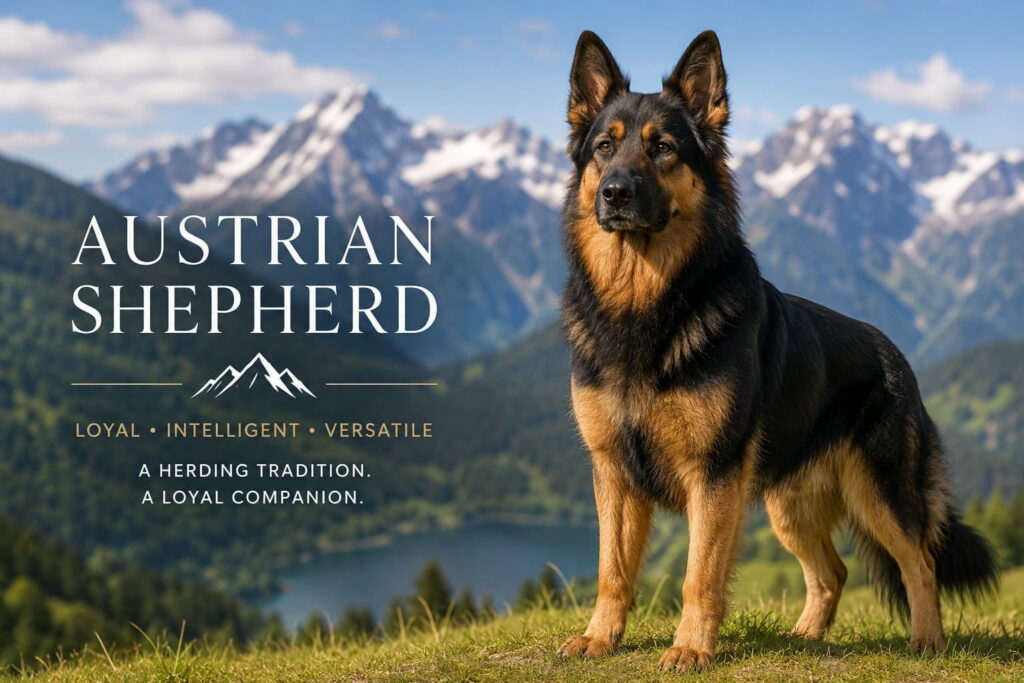
Austrian Shepherd
Austrian Shepherd Complete Guide
The Austrian Shepherd often confused with the Australian Shepherd is an intelligent energetic and loyal companion dog. Known for its striking coat colors strong work ethic and affectionate personality this breed excels as a family pet herding dog and active lifestyle companion.
Austrian Shepherd Care
Proper Austrian Shepherd pet care is essential to ensure a healthy and happy life.
Grooming Needs
Brush the coat 2–3 times per week to reduce shedding.
Increase brushing during seasonal shedding periods.
Bathe only when necessary to maintain natural skin oils.
Trim nails monthly and clean ears regularly.
Exercise Requirements
Austrian Shepherds are highly active dogs that require
60–90 minutes of daily exercise.
Interactive games and agility training.
Long walks, hikes, and outdoor activities.
Mental Stimulation
This breed loves challenges.
Puzzle toys.
Obedience training sessions.
Herding or agility activities.
Austrian Shepherd Nutrition
Proper Austrian Shepherd nutrition supports growth, energy, and overall health.
High-Quality Protein
Choose dog food with
Chicken
Salmon
Turkey
Lamb
Protein helps maintain muscle mass and supports the dog’s active lifestyle.
Healthy Fats
Omega-3 and Omega-6 fatty acids improve
Skin health
Coat shine
Joint function
Essential Nutrients
Look for foods containing
Vitamins A, C, D, and E
Calcium
Phosphorus
Zinc
Feeding Guidelines
Age Meals Per Day
Puppy 3–4
Adult 2
Senior 2
Best Dog Food Recommendations
Premium High-Protein Dog Food
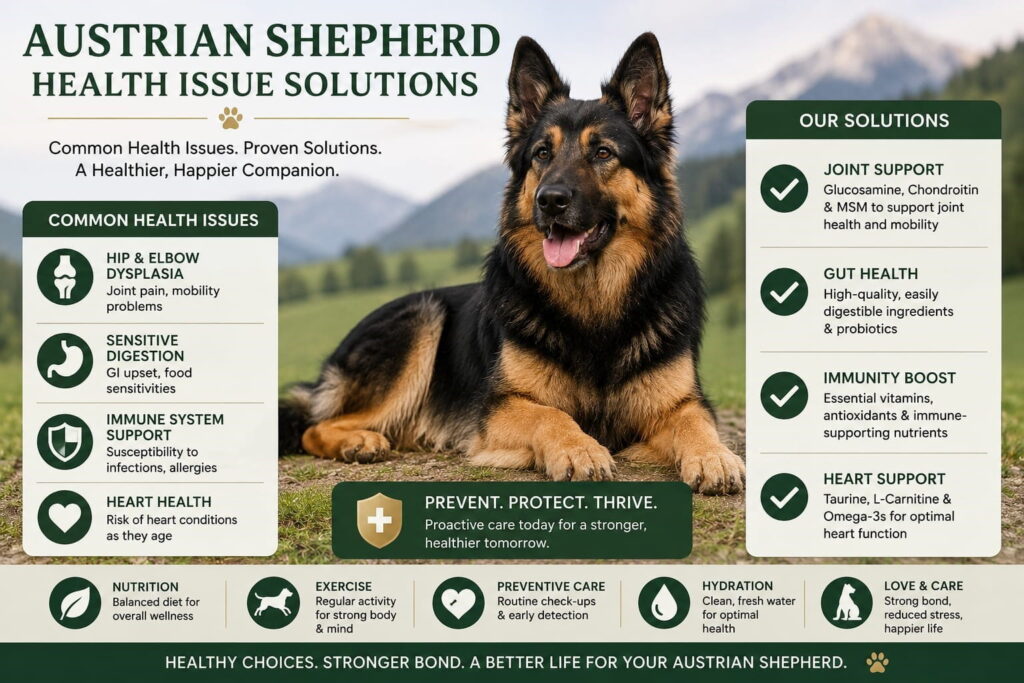
Austrian Shepherd Health Issues and Solutions
Although generally healthy, Austrian Shepherds may experience several hereditary conditions
Hip Dysplasia
Symptoms
Limping
Difficulty standing
Reduced activity
Solution
Maintain healthy weight.
Use joint supplements.
Schedule regular veterinary examinations.
Eye Disorders
Symptoms
Vision problems
Cloudy eyes
Excessive tearing
Solution
Annual eye screenings.
Early veterinary treatment.
Epilepsy
Symptoms
Seizures
Confusion after episodes
Solution
Veterinary diagnosis.
Prescription medications when necessary.
Obesity
Symptoms
Weight gain
Reduced mobility
Solution
Portion-controlled feeding.
Daily exercise routine.
Preventive Health Care
Annual wellness exams.
Vaccinations on schedule.
Parasite prevention.
Dental cleanings.
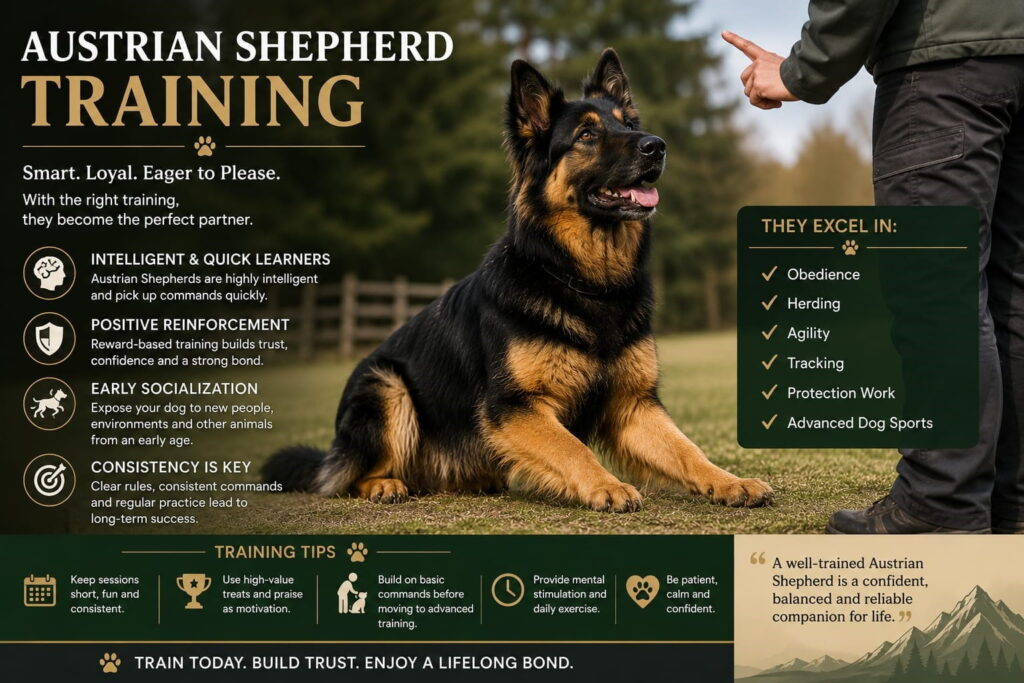
Austrian Shepherd Training Guide
Austrian Shepherds are among the easiest breeds to train due to their intelligence and willingness to work.
Start Early
Begin training during puppyhood
Basic commands
Socialization
House training
Positive Reinforcement
Treats
Praise
Toys
Avoid harsh punishment, as it can damage trust and confidence.
Essential Commands
Teach
Sit
Stay
Come
Leave It
Heel
Socialization Training
Expose your dog to
Different people
Other dogs
Various environments