
Pomeranian Pet Care
Pomeranian
Introduction
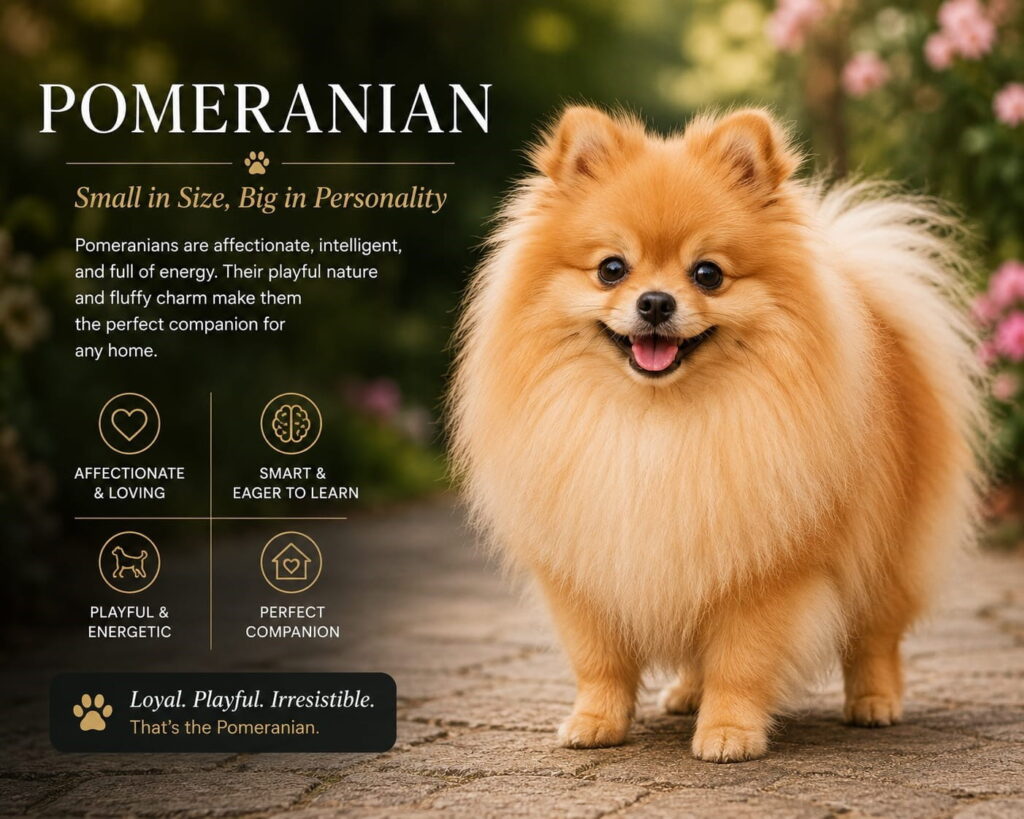
The Pomeranian is one of the most popular toy dog breeds in the world. Known for its fluffy double coat, fox- like face, and lively personality, this small dog packs a big attitude into a tiny body. Originally descended from larger Spitz-type dogs, Pomeranians have become beloved companion pets due to their intelligence, loyalty, and adorable appearance.
Pet Care
Grooming
Pomeranians have a thick double coat that requires regular maintenance.
Brush their coat 3–4 times per week to prevent matting.
Use a slicker brush and metal comb for best results.
Bathe every 4–6 weeks with a gentle dog shampoo.
Trim nails regularly and clean ears weekly.
Nutrition
A balanced diet is crucial for maintaining your Pomeranian’s energy and coat health.
Choose high-quality dog food rich in protein.
Feed small portions 2–3 times daily.
Avoid excessive treats to prevent obesity.
Always provide fresh drinking water.
Recommended Dog Food:
Exercise
Despite their small size, Pomeranians are energetic dogs.
Daily walks of 20–30 minutes.
Indoor play sessions and interactive toys.
Mental stimulation through puzzle toys.
Pomeranian Health Issues and Solutions
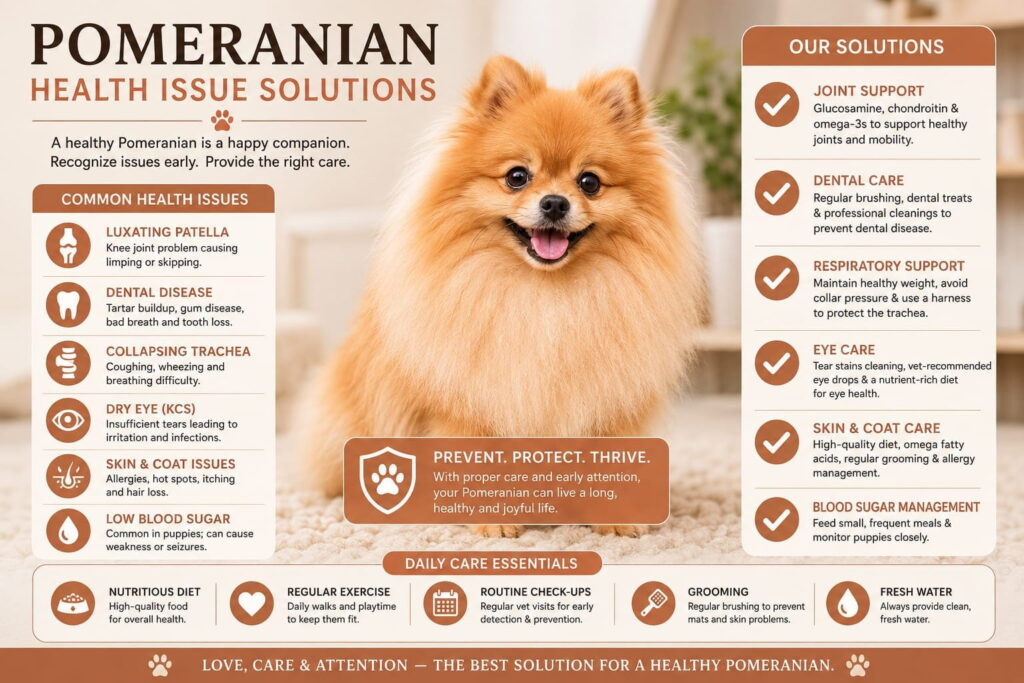
Dental Problems
Issue
Pomeranians are prone to plaque buildup and gum disease.
Solution
Brush teeth daily using dog-safe toothpaste.
Schedule regular veterinary dental checkups.
Provide dental chews.
Collapsed Trachea
Issue
A weakened windpipe can cause coughing and breathing difficulties.
Solution
Use a harness instead of a collar.
Maintain a healthy weight.
Avoid exposure to smoke and pollutants.
Luxating Patella
Issue
The kneecap slips out of place, causing discomfort and limping.
Solution
Keep your dog at a healthy weight.
Provide joint-support supplements if recommended by a veterinarian.
Seek veterinary treatment for severe cases.
Hypoglycemia
Issue
Low blood sugar is common in Pomeranian puppies.
Solution
Feed small meals frequently.
Monitor energy levels.
Consult a veterinarian if symptoms appear.
Pomeranian Training Guide
Start Early
Begin training and socialization as early as possible. Puppies learn faster and adapt more easily to routines.
Positive Reinforcement
Reward desired behavior with
Treats
Praise
Toys
Affection
Avoid harsh punishment, as Pomeranians can become fearful or stubborn.
Potty Training
Establish a consistent schedule.
Take your puppy outside after meals and naps.
Reward successful potty breaks immediately.
Socialization
Expose your Pomeranian to
Different people
Friendly dogs
New environments
Various sounds and experiences
This helps prevent excessive barking and anxiety
Basic Commands
Teach essential commands
Sit
Stay
Come
Down
Leave It
Short 5–10 minute training sessions work best for maintaining attention.