Rottweiler Care Guide
How to Raise a Strong and Loyal Dog
Introduction
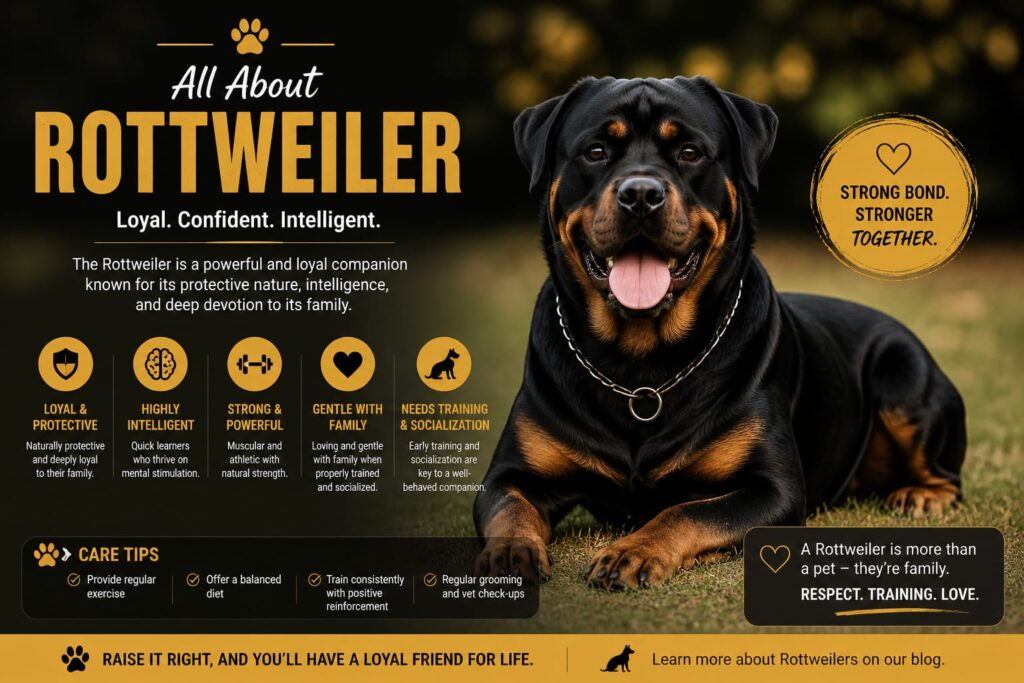
Rottweilers are confident and courageous dogs with a natural guarding instinct. Despite their tough appearance they are affectionate with their families and can be great companions when properly trained and socialized. However they require responsible ownership consistent discipline and a healthy lifestyle.
Pet Care Nutrition for Rottweilers
Proper Pet Care Nutrition plays a crucial role in your Rottweiler’s growth energy levels and overall health.
High-quality protein: Supports muscle development
Healthy fats: Maintain coat health and energy
Calcium & phosphorus: Essential for strong bones
Vitamins & minerals: Boost immunity
Feeding Tips
Puppies need 3–4 meals daily adults need 2 balanced meals
Avoid overfeeding to prevent obesity
Always provide fresh clean water
You can recommend premium dog food brands and earn through affiliate links
Health Issues & Solution
Hip and Elbow Dysplasia
This is one of the most common issues in large breeds like the Rottweiler. It occurs when joints don’t develop properly, leading to pain and mobility problems.
Solutions
Maintain a healthy weight to reduce joint stress
Provide joint supplements (glucosamine, chondroitin)
Avoid excessive jumping during puppyhood
Regular vet checkups and X-rays if needed
Obesity
Rottweilers love food, which makes them prone to weight gain.
Solutions
Feed measured portions (avoid free feeding)
Provide daily exercise (at least 1–2 hours)
Limit treats and avoid human junk food
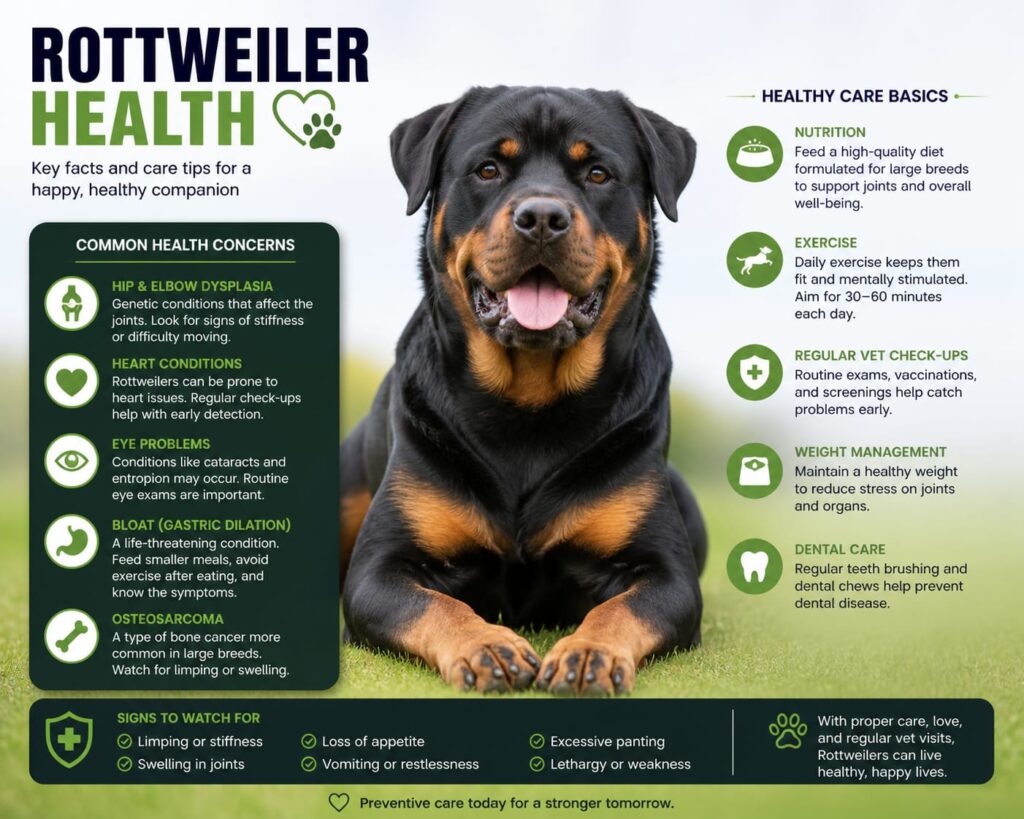
Heart Problems (Aortic Stenosis)
A serious condition affecting blood flow from the heart.
Solutions
Early diagnosis through vet screening
Avoid overexertion if diagnosed
Follow prescribed medications
Bloat (Gastric Dilatation-Volvulus)
A life-threatening condition where the stomach twists.
Solutions
Feed smaller meals multiple times a day
Avoid exercise right after meals
Use slow-feeder bowls
Cancer (Osteosarcoma)
Unfortunately Rottweilers have a higher risk of bone cancer.
Solutions
Regular health screenings
Early detection is critical
Maintain a strong immune system with proper diet
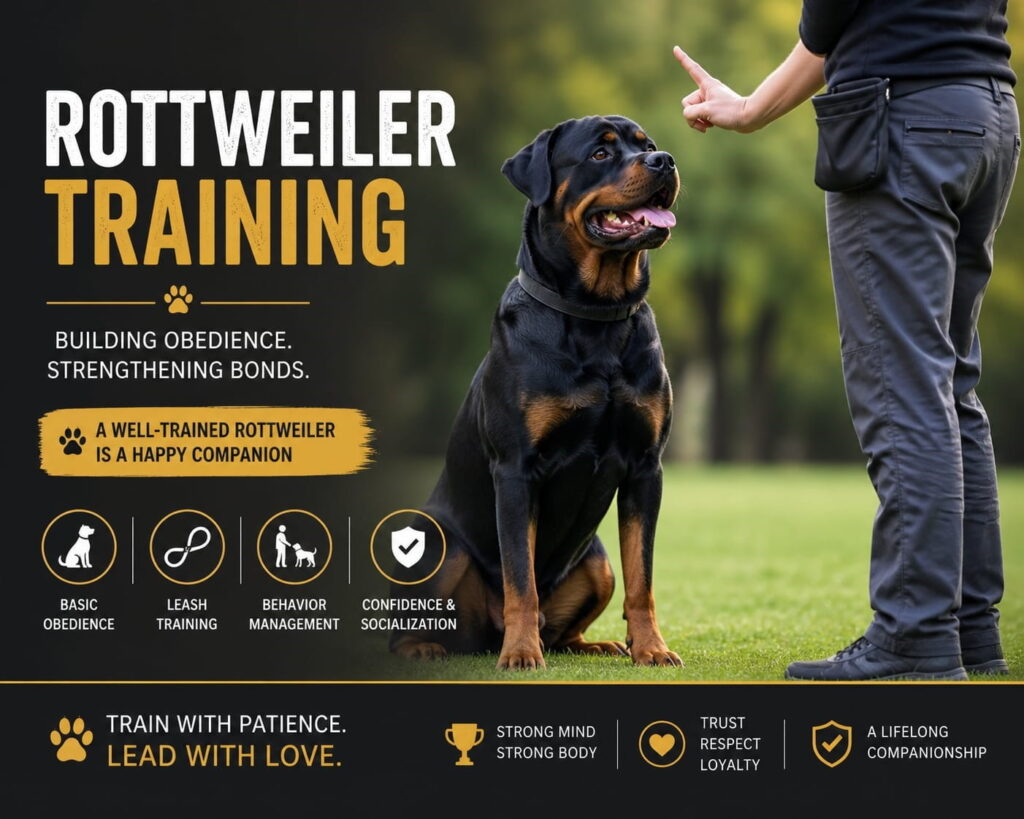
Rottweiler Training Guide
Training a Rottweiler isn’t optional it’s essential. Their size and strength mean poor training can lead to serious problems.
Start Early (Puppy Stage)
Early training builds good habits.
Begin basic commands at 8 weeks
Focus on socialization with people and other animals
Expose them to different environments
Use Positive Reinforcement
Rottweilers respond best to reward-based training.
Use treats, praise, and toys
Be consistent with commands
Avoid harsh punishment—it can lead to aggression
Teach Basic Commands
Essential commands include
Sit
Stay
Come
Heel
These commands improve control and safety.
Exercise & Mental Stimulation
Rottweilers are working dogs—they need both physical and mental activity.
Daily walks and play sessions
Puzzle toys and obedience drills
Activities like guarding training or agility
Consistency and Leadership
Rottweilers respect confident owners
Set clear rules and boundaries
Stick to routines
Ensure all family members follow the same training rules