Belgian Malinois
Belgian Malinois Care Guide
Introduction
The Belgian Malinois is a medium-to-large herding breed originally from Belgium. They are often mistaken for German Shepherds but are typically leaner more agile and higher in energy.
Belgian Malinois Nutrition Guide
Proper nutrition is critical for maintaining your dog’s energy levels muscle health and overall well being.
What Should You Feed?
A high-protein, nutrient-rich diet is essential. Look for
Protein (25–30%): Chicken, beef, lamb, or fish
Healthy fats: Omega-3 & Omega-6 for coat and joints
Carbohydrates: Brown rice, sweet potatoes
Vitamins & minerals: For immune support
Feeding Schedule
Puppies: 3–4 meals/day
Adults: 2 meals/day
Recommended Products
High-Protein Dog Food

Health Issues & Solutions
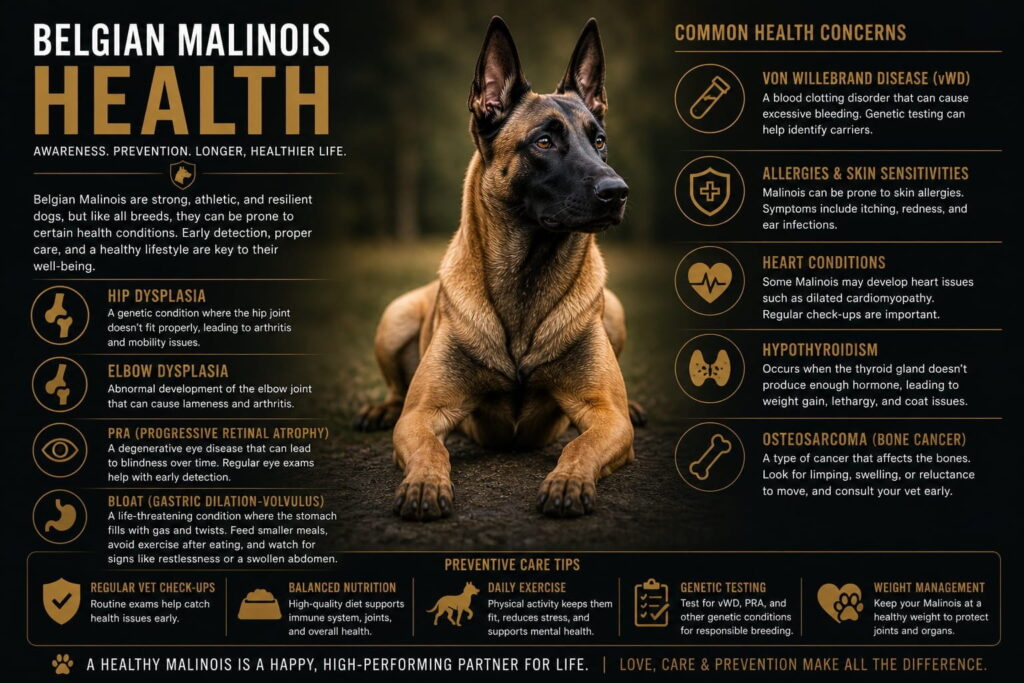
Belgian Malinois are generally healthy but prone to certain conditions
Hip & Elbow Dysplasia
Problem: Joint malformation leading to pain and mobility issues
Solution
Maintain healthy weight
Use joint supplements
Provide orthopedic beds
Progressive Retinal Atrophy (PRA)
Problem: Gradual vision loss
Solution
Regular vet checkups
Genetic screening before breeding
Bloat (Gastric Torsion)
Problem: Life-threatening stomach twisting
Solution
Feed smaller meals
Avoid exercise after eating
Use slow feeder bowls
Skin Allergies
Problem: Itching, redness, hair loss
Solution
Hypoallergenic diet
Regular grooming
Omega supplements
Belgian Malinois Training
Training is not optional—it’s essential. Without proper training their intelligence and energy can turn into destructive behavior.
Basic Training Tips
Start early (puppy stage)
Use positive reinforcement
Be consistent and firm
Keep sessions short but frequent
Exercise Needs
1–2 hours of daily activity
Mental stimulation (puzzle toys, obedience work)
Belgian Malinois Pet Care Tips
Proper pet care goes beyond food and training
Grooming
Brush weekly
Bathe occasionally
Clean ears and trim nails
Living Environment
Best suited for active homes
Needs space to run
Not ideal for apartment living (unless highly active owner)