
Great Dane
Great Dane Care Guide: Training, Food & Health Tips
Introduction
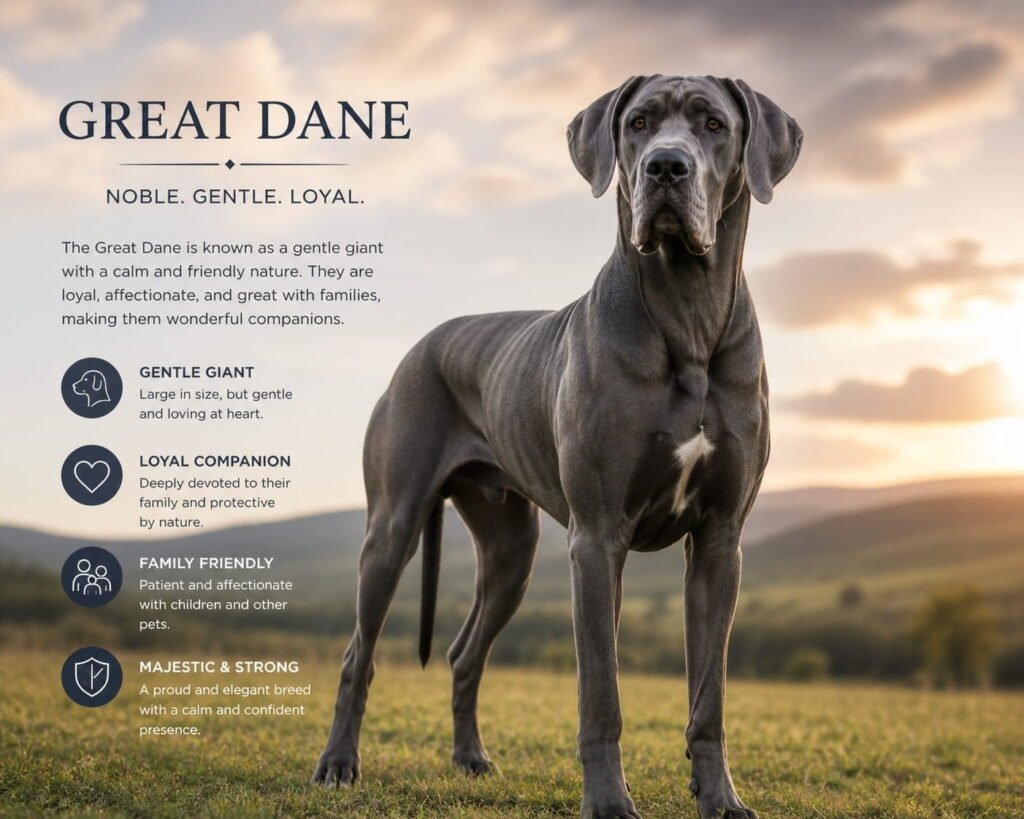
Great Danes are loyal social and surprisingly sensitive dogs. Despite their intimidating appearance they are friendly and often crave human companionship. Because of their rapid growth and large body structure proper pet care is essential from an early age.
They are not low-maintenance dogs. They require space attention proper diet and consistent training. If you neglect any of these areas it can lead to serious health and behavioral problems.
Pet Care Essentials for Great Danes
When it comes to pet care Great Danes need both physical and emotional attention. Their large bodies put stress on joints and bones so providing a comfortable resting space is important. Orthopedic dog beds are highly recommended to prevent joint issues.
Exercise is also a key part of pet care but it must be balanced. Puppies should not be over-exercised because their bones are still developing. Adult Great Danes enjoy daily walks and light playtime but they are not overly energetic dogs.
Grooming is relatively easy. Their short coat requires brushing once a week to remove loose hair and maintain shine. Regular nail trimming ear cleaning and dental hygiene should also be part of your routine.
Another important aspect of pet care is regular vet checkups. Due to their size Great Danes are prone to certain health issues that must be monitored early.
Nutrition for Great Danes
Proper nutrition is one of the most critical elements in raising a healthy Great Dane. Because they grow quickly, especially during the first 18 months their diet must support controlled growth.
Feeding them low-quality food can lead to bone disorders and obesity. A high-quality dog food designed for large or giant breeds is essential. These formulas are balanced with the right amount of protein calcium and phosphorus.
Puppies should be fed 2–3 times a day with controlled portions to avoid rapid growth. Overfeeding can cause developmental issues. Adult Great Danes usually eat twice a day.
Protein is essential for muscle development but too much can be harmful during puppy stages. Look for food that contains real meat healthy fats and digestible carbohydrates.
Hydration is equally important. Always provide fresh water especially after meals and exercise.
If you’re looking for recommended food options and supplements, you can explore this trusted affiliate link for high-quality Great Dane nutrition products
Health Issues in Great Danes
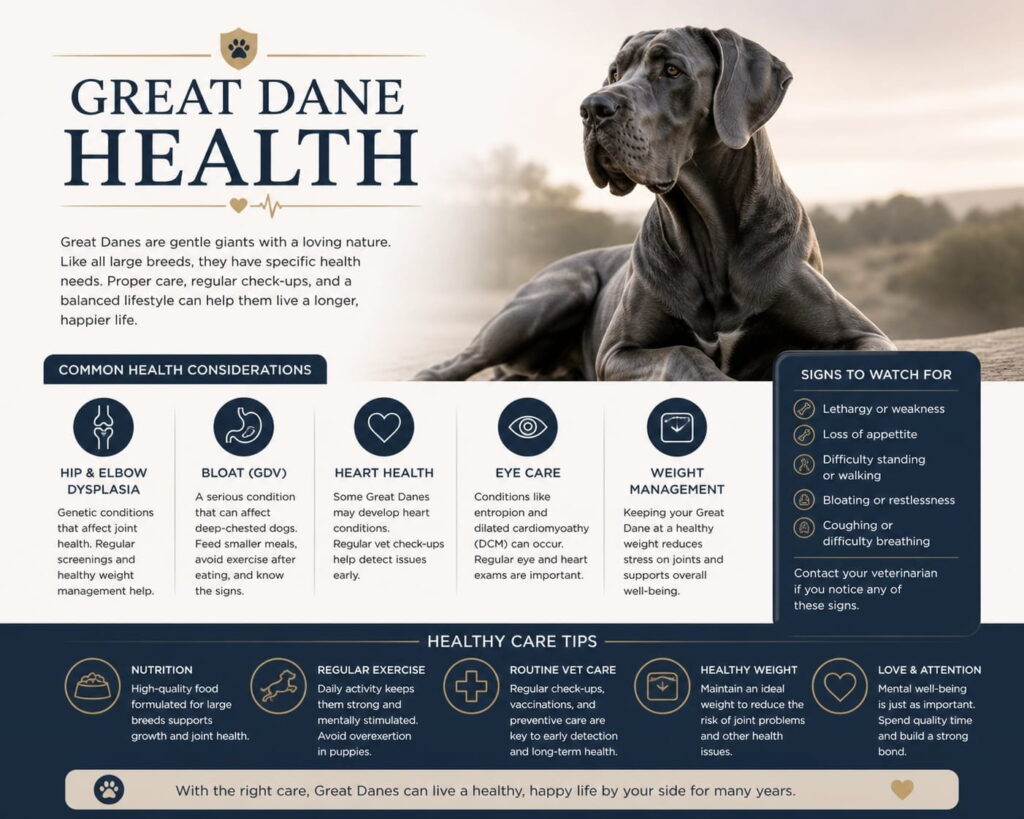
Great Danes are prone to several health issues due to their size and genetics. Understanding these problems is a key part of responsible pet care.
Bloat (Gastric Dilatation-Volvulus)
This is one of the most serious and life-threatening conditions in Great Danes. It occurs when the stomach fills with gas and twists.
Symptoms include
Swollen abdomen
Restlessness
Drooling
Difficulty breathing
Solution
Feed smaller meals multiple times a day instead of one large meal. Avoid exercise immediately after eating. Elevated feeding bowls may help in some cases.
Hip Dysplasia
This is a joint condition where the hip socket doesn’t form properly.
Solution
Maintain a healthy weight, provide joint supplements, and avoid over-exercising puppies. Orthopedic beds also help reduce stress on joints.
Heart Disease (Dilated Cardiomyopathy)
Great Danes are at risk of heart problems as they age.
Solution
Regular vet checkups and a balanced diet rich in taurine and essential nutrients can help reduce risks.
Bone and Joint Problems
Rapid growth can lead to weak bones and joint stress.
Solution
Proper nutrition and controlled exercise are crucial. Avoid high-impact activities during puppyhood.
Short Lifespan
Unfortunately, Great Danes have a shorter lifespan (typically 7–10 years).
Solution
While you can’t control genetics, excellent pet care, proper nutrition, and early detection of health issues can help extend their life.
Training Your Great Dane
Training a Great Dane is not optional—it is necessary. Due to their size an untrained Great Dane can become difficult to manage.
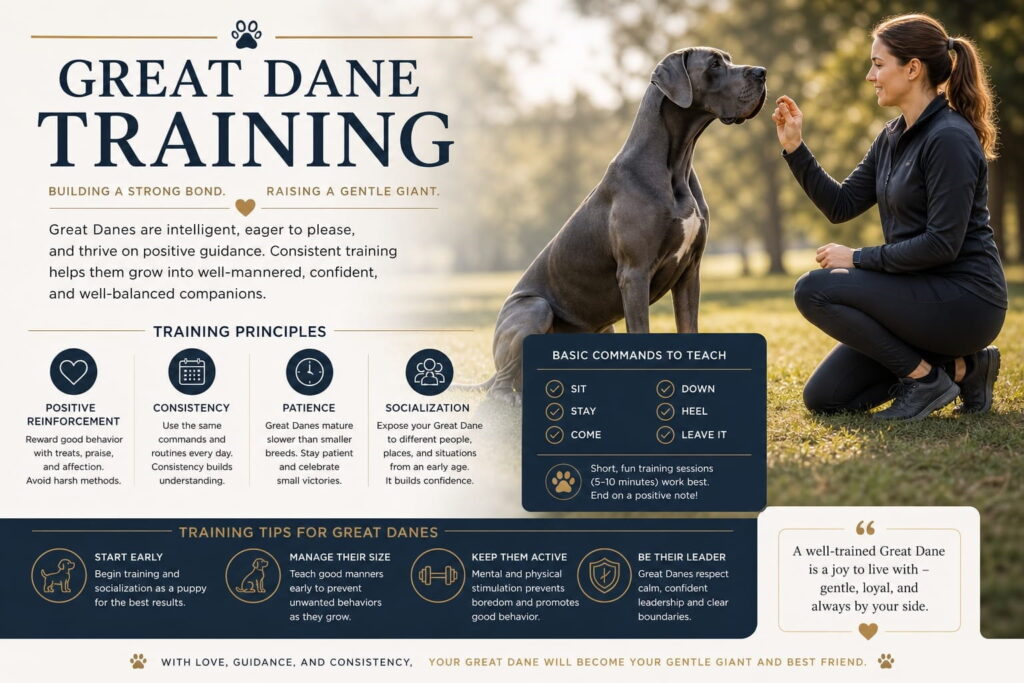
Start training early while they are still small. Focus on basic commands like sit, stay come, and leash walking. Positive reinforcement works best with this breed. They respond well to praise, treats and gentle correction.
Socialization is also important. Introduce your Great Dane to different people, environments and other animals from a young age. This helps prevent fear and aggression later in life.
Crate training can be useful, especially for housebreaking. However make sure the crate is large enough for their size.
Avoid harsh training methods. Great Danes are sensitive and can become anxious or stubborn if treated poorly.
Consistency is key. Set rules and stick to them. If you allow bad behavior when they are small it will become a serious issue when they grow into a giant dog.