Boxer Dog

Boxer Dog Care Guide

Introduction

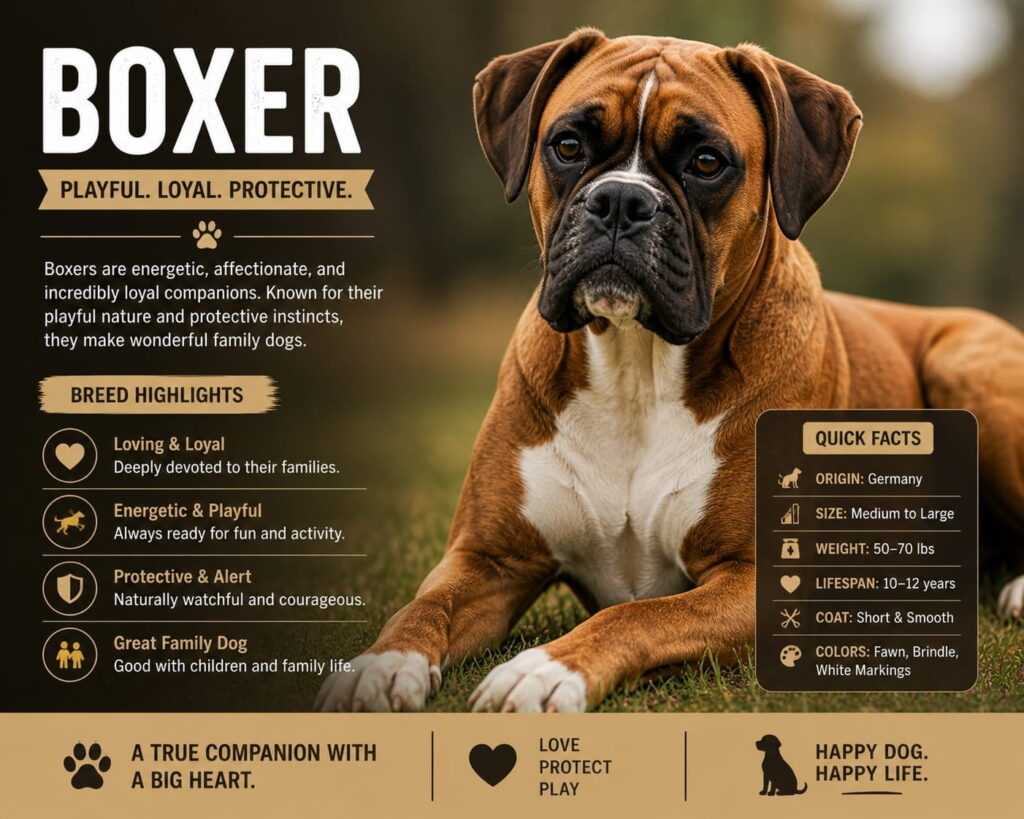
The Boxer is a medium-to-large working breed originally developed in Germany. They are muscular active and highly affectionate with families. Boxers are known for their alertness making them excellent guard dogs and loving pets.

Boxer Breed Highlights

Lifespan: 10–12 years

Weight: 55–80 pounds

Temperament: Loyal, playful, energetic

Best For: Active families and experienced dog owners

Boxer Pet Care Nutrition Guide

Nutrition plays a major role in keeping your Boxer healthy. A balanced diet helps improve digestion skin health energy levels and muscle strength.

Best Food for Boxer Dogs

Boxers need

High-quality protein

Healthy fats

Vitamins and minerals

Joint-support ingredients

Recommended Dog Foods
Boxer Grooming and Care

Boxer Grooming and Care

Boxers have short coats that are easy to maintain, but regular care is still important.

Grooming Tips

Brush weekly to reduce shedding

Bathe every 6–8 weeks

Clean ears regularly

Trim nails monthly

Boxer Health Issues and Solutions

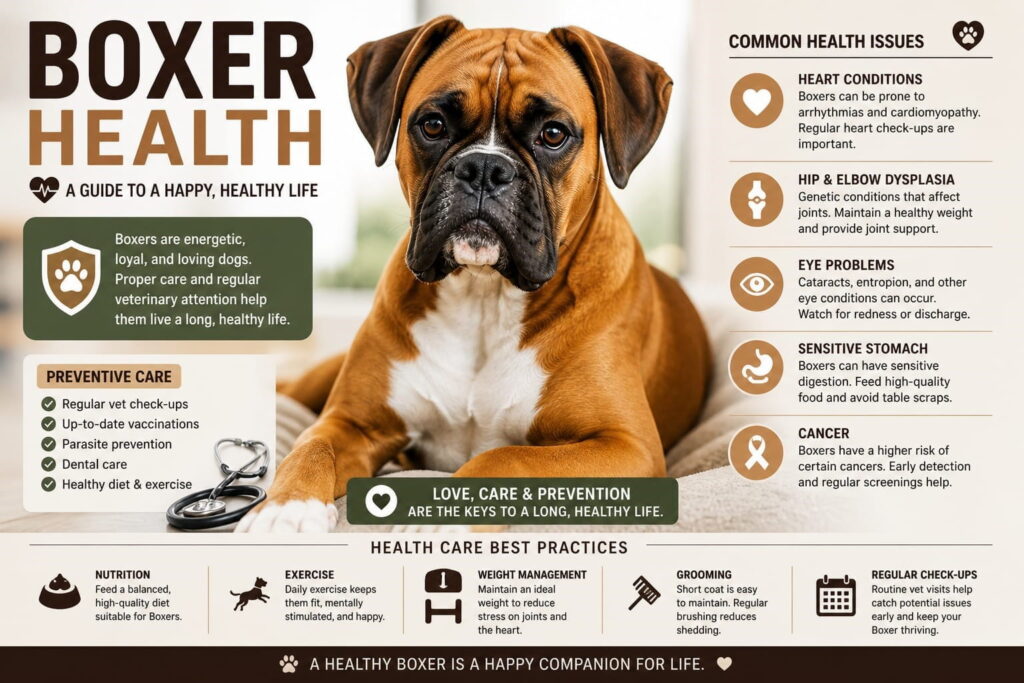
Boxers are prone to certain health problems. Early detection and proper care can improve their quality of life.

Hip Dysplasia

Symptoms

Difficulty walking

Joint pain

Limping

Solution

Joint supplements

Weight management

Regular exercise

Heart Problems

Boxers can develop Boxer Cardiomyopathy.

Symptoms

Weakness

Fainting

Breathing issues

Solution

Regular vet checkups

Heart-healthy nutrition

Moderate exercise

Allergies and Skin Problems

Symptoms

Itchy skin

Redness

Hair loss

Solution

Grain-free diets

Omega-3 supplements

Hypoallergenic shampoos
Boxer Health Issues and Solutions

Boxer Training Tips

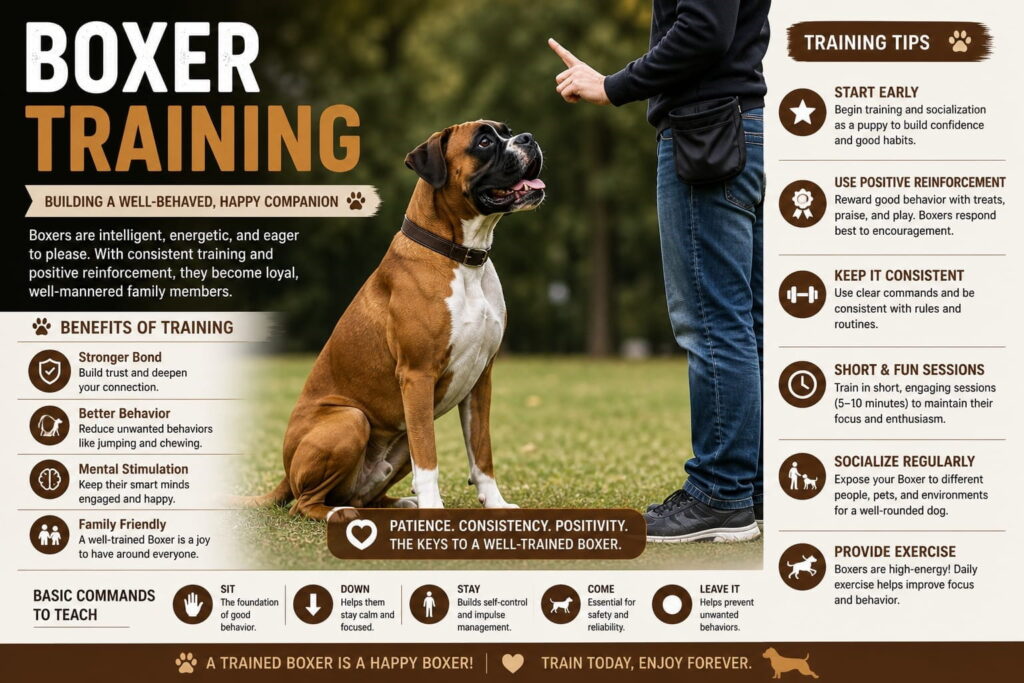
Boxers are intelligent but can be stubborn. Early training and socialization are very important.

Basic Training Commands

Sit

Stay

Come

Heel

Training Tips

Use positive reinforcement

Keep sessions short and fun

Reward good behavior with treats

Exercise before training sessions

Exercise Requirements for Boxers

Boxers are high-energy dogs and require daily physical activity.

Best Activities

Walking

Running

Fetch

Agility training
Boxer Training Tips

Similar Posts

  • German Shepherd

    German Shepherd German Shepherds are intelligent loyal and highly active dogs but they also require thoughtful care to stay healthy and happy. If you’re a current or future owner understanding their nutrition common health issues and training needs is essential. This guide brings everything together with a focus on pet care nutrition to help your…

  • Doberman Pinscher

    Doberman Pinscher Breed Guide Introduction Originally bred in Germany by Karl Friedrich Louis Dobermann the Doberman Pinscher was developed as a guard dog. Today they are known for their loyalty intelligence and athletic build. Lifespan: 10–13 years Temperament: Loyal, alert, energetic Size: Medium to large Ideal for: Active families, experienced dog owners Doberman Pinscher Pet…

  • Siberian Huskies

    Siberian Huskies Introduction Huskies are medium-sized working dogs with thick double coats erect ears and expressive eyes that are often blue brown or even one of each. They thrive in active households and enjoy running exploring and social interaction. However their high energy levels and independent nature can be challenging for first-time dog owners. Pet…

  • Great Dane

    Great Dane Care Guide: Training, Food & Health Tips Introduction Great Danes are loyal social and surprisingly sensitive dogs. Despite their intimidating appearance they are friendly and often crave human companionship. Because of their rapid growth and large body structure proper pet care is essential from an early age. They are not low-maintenance dogs. They…

  • Belgian Malinois

    Belgian Malinois Care Guide Introduction The Belgian Malinois is a medium-to-large herding breed originally from Belgium. They are often mistaken for German Shepherds but are typically leaner more agile and higher in energy. Belgian Malinois Nutrition Guide Proper nutrition is critical for maintaining your dog’s energy levels muscle health and overall well being. What Should…

Leave a Reply

Your email address will not be published. Required fields are marked *