
Doberman Pinscher
Doberman Pinscher Breed Guide
Introduction
Originally bred in Germany by Karl Friedrich Louis Dobermann the Doberman Pinscher was developed as a guard dog. Today they are known for their loyalty intelligence and athletic build.
Lifespan: 10–13 years
Temperament: Loyal, alert, energetic
Size: Medium to large
Ideal for: Active families, experienced dog owners

Doberman Pinscher Pet Care
Proper pet care is crucial to keep your Doberman healthy and happy.
Exercise Needs
Dobermans are high-energy dogs and require
Daily walks (at least 60–90 minutes)
Playtime and mental stimulation
Activities like agility training or running
Grooming
Their short coat is easy to maintain
Brush once a week
Bathe every 4–6 weeks
Regular nail trimming and ear cleaning
Living Environment
Dobermans do best in
Homes with space to move
Indoor living with family interaction
Secure fenced yards
Doberman Pinscher Nutrition Guide
Proper nutrition plays a vital role in your dog’s overall health and longevity.
Balanced Diet
Feed high-quality dog food rich in
Protein (chicken, beef, fish)
Healthy fats
Essential vitamins and minerals
Premium high-protein dog food brands.
Feeding Schedule
Puppies: 3–4 meals/day
Adults: 2 meals/day
Avoid overfeeding to prevent obesity.
Supplements
Some Dobermans benefit from
Omega-3 for coat health
Joint support supplements
Probiotics for digestion
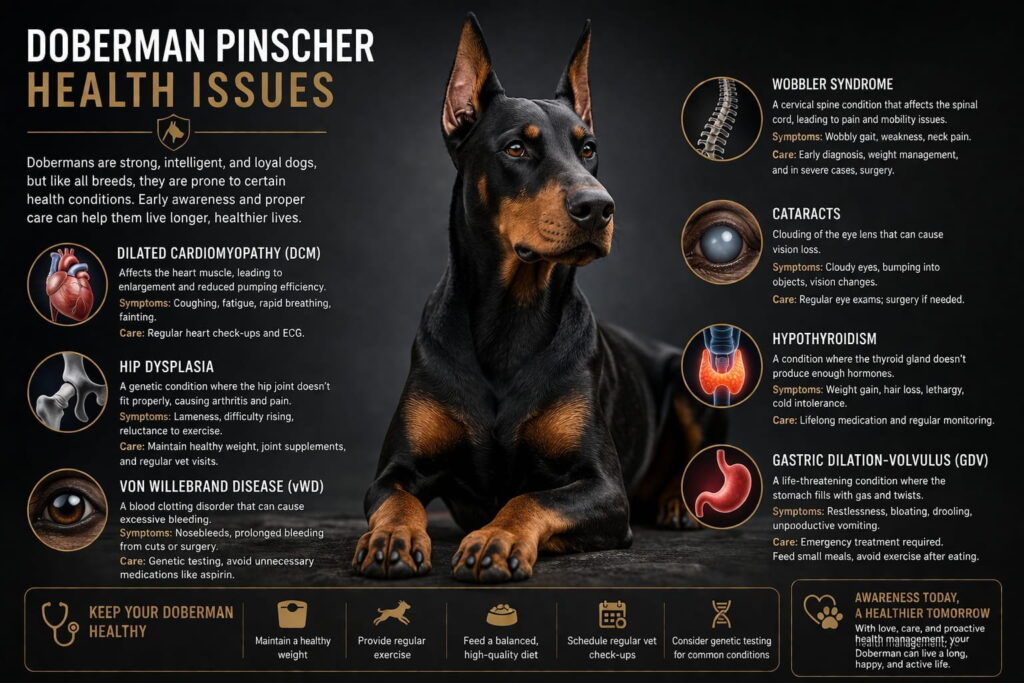
Health Issues
Dilated Cardiomyopathy (DCM)
A common heart condition in Dobermans
Solution
Regular vet checkups
Heart-healthy diet
Early screening
Hip Dysplasia
A joint issue that affects mobility.
Solution
Maintain healthy weight
Provide joint supplements
Use orthopedic dog beds
Bloat (Gastric Torsion)
A life-threatening condition.
Solution
Feed smaller meals
Avoid exercise after eating
Use slow-feeder bowls
Skin Allergies
Dobermans can have sensitive skin.
Solution
Hypoallergenic dog food
Regular grooming
Vet-approved shampoos
Doberman Pinscher Training
Training is essential for a well-behaved Doberman.
Start Early
Begin training during puppyhood
Basic commands (sit, stay, come)
Socialization with people and pets
Use Positive Reinforcement
Reward-based training works best
Treats
Praise
Toys
Consistency is Key
Set clear rules
Stick to routines
Avoid harsh punishment

Mental Stimulation
Dobermans are highly intelligent
Puzzle toys
Obedience challenges
Advanced training sessions