
Saint Bernard Pet Care Guide
Saint Bernard
Introduction
Saint Bernards originated in the Swiss Alps where they were bred as rescue dogs. These giant dogs are famous for their calm behavior and affectionate nature. Adult Saint Bernards can weigh between 120 to 180 pounds making proper dog nutrition and healthcare extremely important.
Best Nutrition for Saint Bernard Dogs
Proper dog nutrition is the foundation of good health. Saint Bernards require balanced meals rich in protein healthy fats vitamins and minerals.
Choose High-Quality Large Breed Dog Food
Saint Bernards require dog food specifically formulated for large or giant breeds. These formulas contain controlled calcium and phosphorus levels to support safe bone growth.
Important Nutrients for Saint Bernards
High-quality animal protein
Omega-3 fatty acids
Glucosamine and chondroitin
Healthy fats
Essential vitamins and minerals
Recommended Product

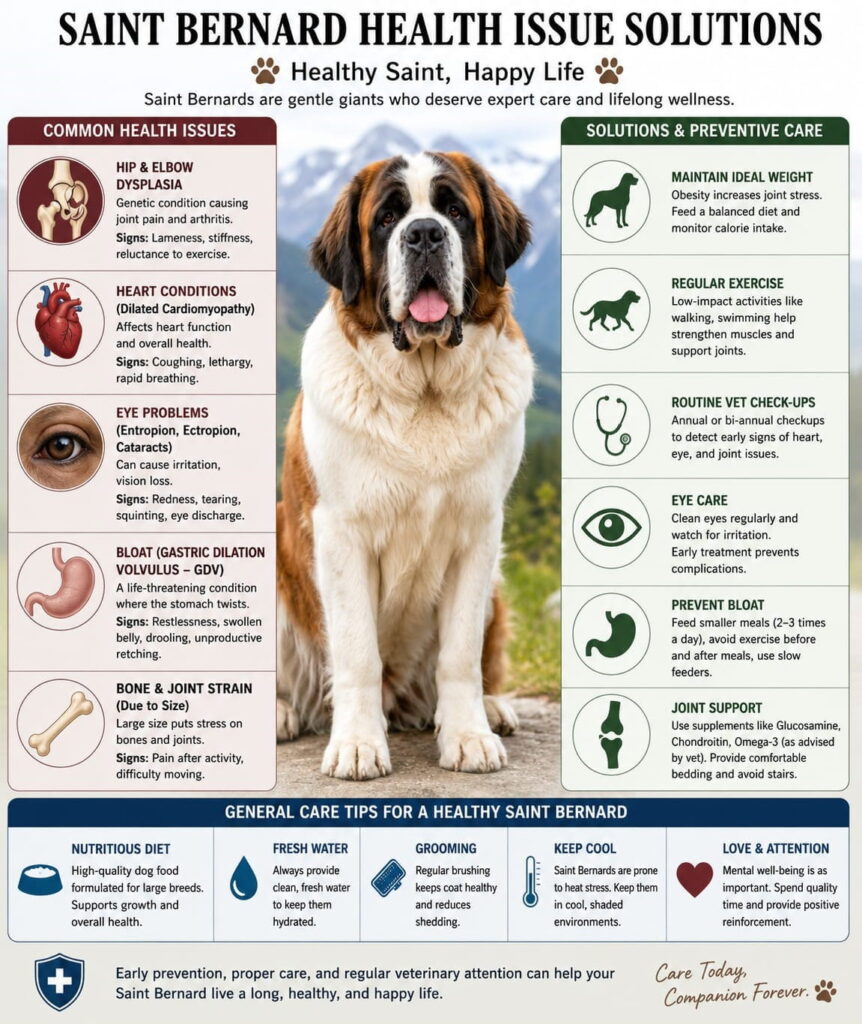
Saint Bernard Health Issues
Understanding common health conditions allows pet owners to recognize symptoms early and seek veterinary care when needed.
Hip and Elbow Dysplasia
Hip dysplasia is one of the most common orthopedic problems in Saint Bernards. It occurs when the joints develop abnormally, leading to pain and reduced mobility.
Symptoms Include
Limping
Difficulty standing
Stiffness after rest
Reluctance to exercise
Prevention Tips
Maintain healthy body weight
Avoid excessive jumping during puppyhood
Provide orthopedic bedding
Use joint supplements regularly
Gastric Dilatation-Volvulus (Bloat)
Bloat is a life-threatening emergency commonly seen in deep-chested breeds like Saint Bernards.
Signs of Bloat
Distended abdomen
Excessive drooling
Unsuccessful vomiting
Restlessness
How to Reduce Risk
Feed smaller meals throughout the day
Avoid intense exercise after meals
Prevent rapid eating
Immediate veterinary attention is essential if symptoms appear.
Heat Sensitivity
Saint Bernards have thick double coats that make them vulnerable to overheating.
Summer Pet Care Tips
Keep dogs indoors during peak heat
Provide continuous access to water
Use cooling mats and fans
Avoid long walks in hot weather
Grooming and Coat Care
Saint Bernards shed heavily throughout the year and require consistent grooming to maintain coat health.
Brushing Routine
Brush your Saint Bernard at least three to four times per week using high-quality grooming tools.
Essential Grooming Tools
Slicker brush
Undercoat rake
De-shedding comb
Bathing and Hygiene
Bathing every 6–8 weeks helps maintain healthy skin and coat condition. Always use dog-friendly shampoos designed for sensitive skin.
Additional hygiene practices include
Nail trimming
Ear cleaning
Dental care
Eye cleaning
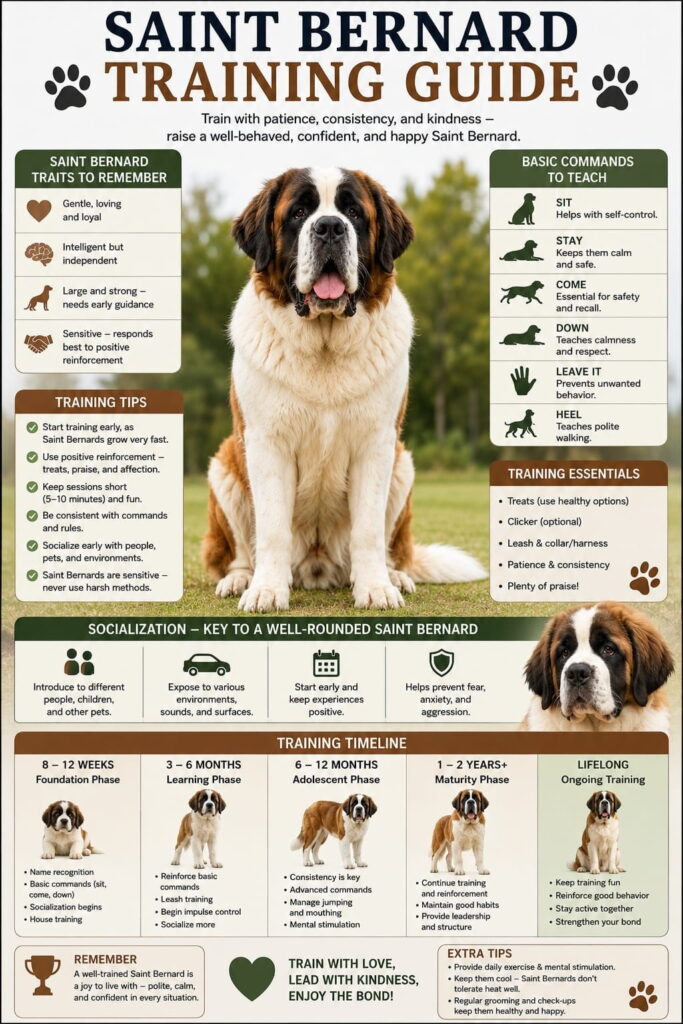
Saint Bernard Training Tips
Early training is extremely important for giant breed dogs. A fully grown Saint Bernard is powerful, so good behavior should begin during puppyhood.
Start Socialization Early
Expose your puppy to
Different people
Other dogs
New environments
Household sounds
Proper socialization helps reduce anxiety and improves confidence.
Basic Obedience Training
Teach essential commands such as
Sit
Stay
Come
Heel
Leave it
Positive reinforcement training works best with Saint Bernards because they respond well to praise and rewards.
Leash Training for Large Dogs
Because Saint Bernards are extremely strong, leash manners are essential.
Recommended Equipment
No-pull harness
Adjustable training collar
Exercise Requirements
Although Saint Bernards are relatively calm indoors, they still require regular physical activity to maintain healthy weight and muscle condition.
Daily Exercise Recommendations
30–60 minute walks
Gentle play sessions
Mental stimulation games
Basic obedience practice
Avoid overexercising puppies because excessive strain can damage developing joints.